April is the cruelest month
May - November, 2021
Westbrook, Margate, UK
Commissioned by Waterfronts Program with Turner Contemporary
The title of the work refers to the opening line of TS Eliot’s The Wasteland, part of which was written in the shelter on the coast of Margate whilst he was convalescing from a nervous breakdown. Just as the poem makes reference to collapse, so too does the title, invoking the month of April 2003, when the destruction of Iraq was characterized not only by human casualties, but also by the destruction and disappearance of its cultural heritage. On 9 April, Saddam’s statue in Baghdad’s Firdos Square was toppled. The next day, the National Museum of Iraq was looted; more than 7,000 of its artefacts remain lost. The following week, the Basra corniche soldiers were gone.
April is the Cruelest Month is modeled after Daniel Taylor, a young soldier who served with the Royal Artillery in Basra, Iraq, during the Iraq War in 2003. The sculpture is cast from a combination of concrete, calcite from Margate, and soil from Basra. Embedded within the material are objects and artworks associated with war and trauma, donated by Veterans for Peace and residents of Kent.
Standing in solidarity with the Iraqi people, the petrified body of the sculpture reflects the trauma of British soldiers who fought in a war I came to feel was unethical. In April is the Cruellest Month, the Iraqi authoritarian monument undergoes an inversion — as if, after being thrown into the Shatt Al Arab, it traveled beneath the seas, concretizing around objects of trauma along the way, and reemerged in Margate as a monument to serve as a symbol of peace, an anti-war memorial.
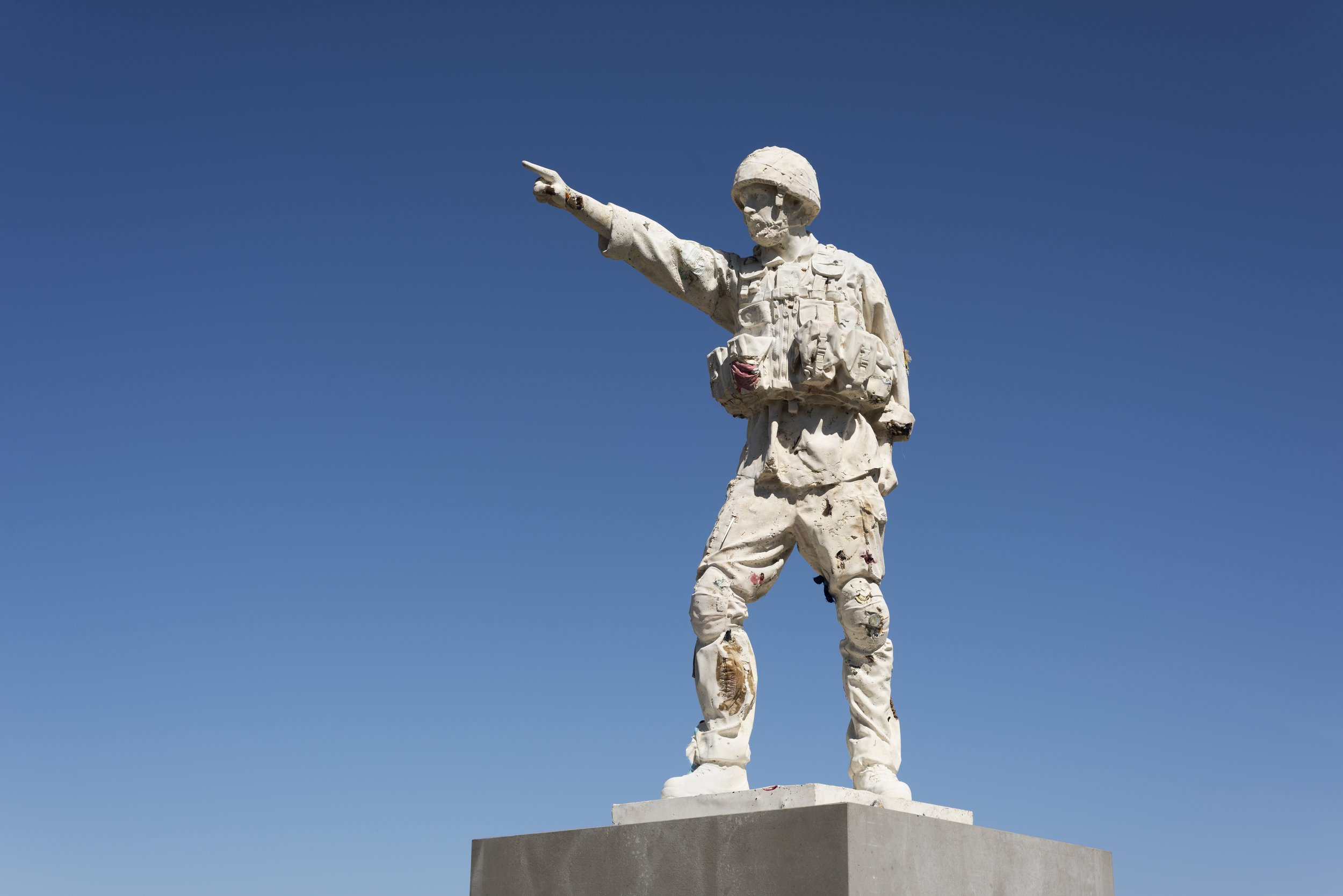
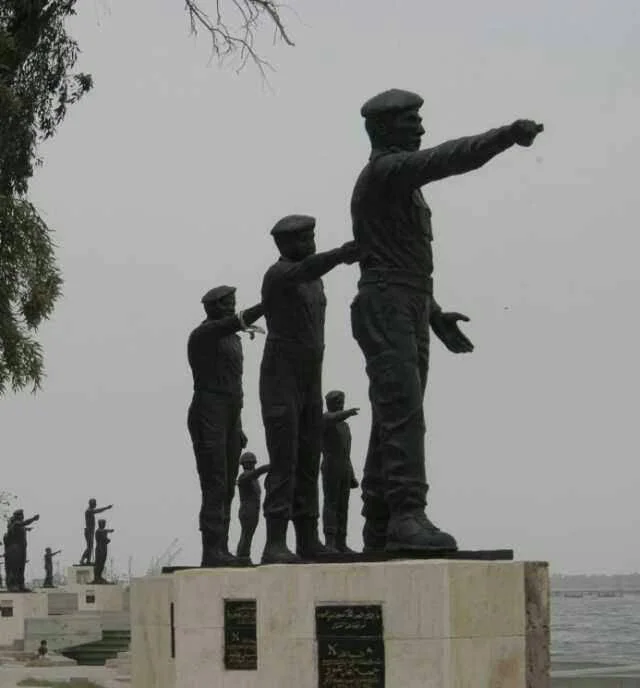
The formal inspiration for the sculpture draws from a Basra memorial consisting of 80 larger-than-life bronze statues of Iraqi soldiers, commemorating those killed in the Iran–Iraq War. The statues’ fingers pointed accusingly across the Shatt Al Arab toward Iran, where they were felled. Intended not just as a memorial but also a warning to the local Shia population, these statues were removed during the British Occupation of Basra in 2003
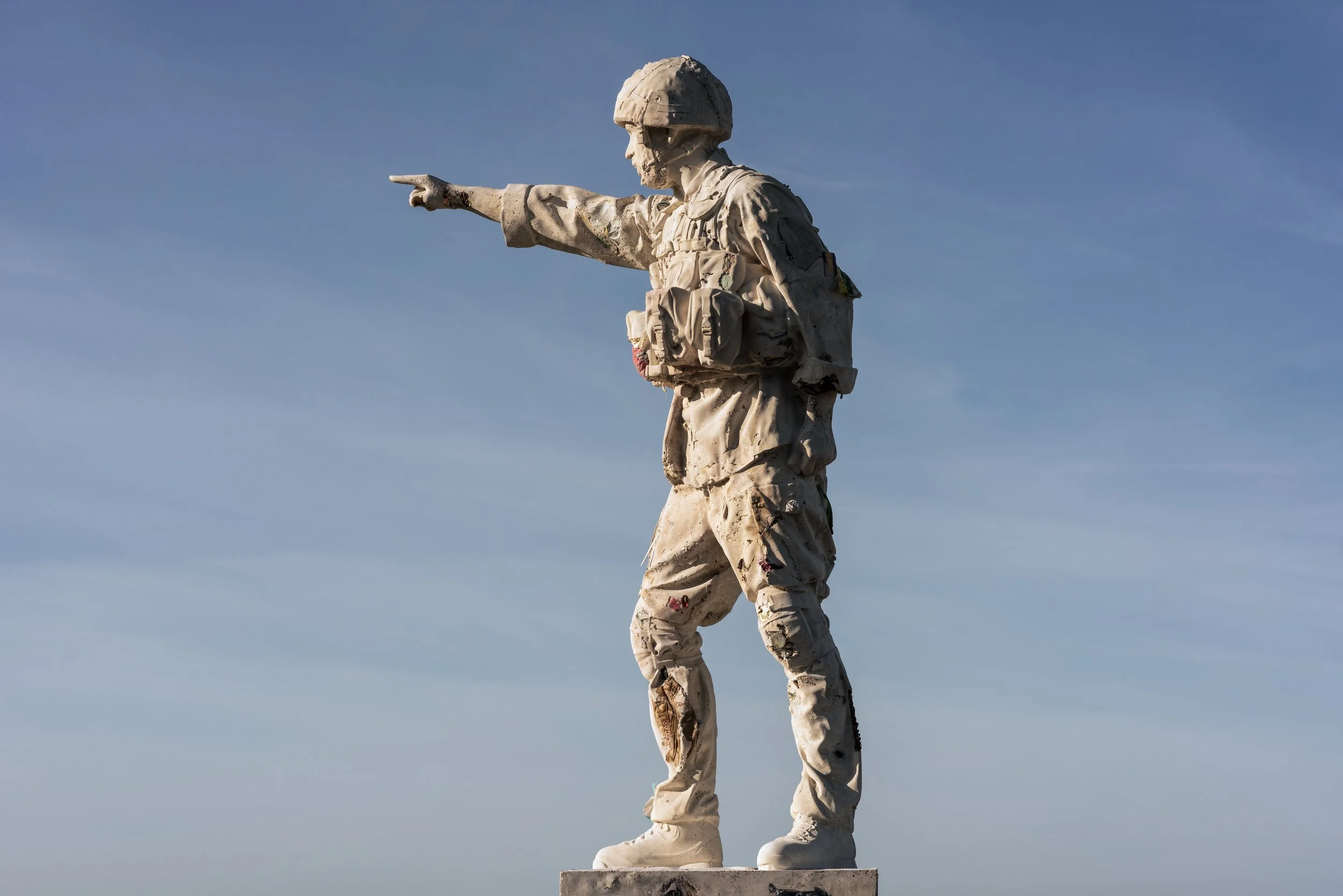
I thought about what happens to the British soldier that sees these authoritarian sculptures being torn off their pedestals and thrown into the Shatt Al-Arab by the local population. Do they see themselves in that Iraqi soldier? Do they see themselves in this continuous history of invaders and occupiers, who will themselves eventually be removed? And so I began to imagine that sculpture underwater, traveling from the Shatt Al Arab to the Persian Gulf, making its way, accumulating barnacles and other small sea life as it went, and then eventually emerging on the coast of Margate.
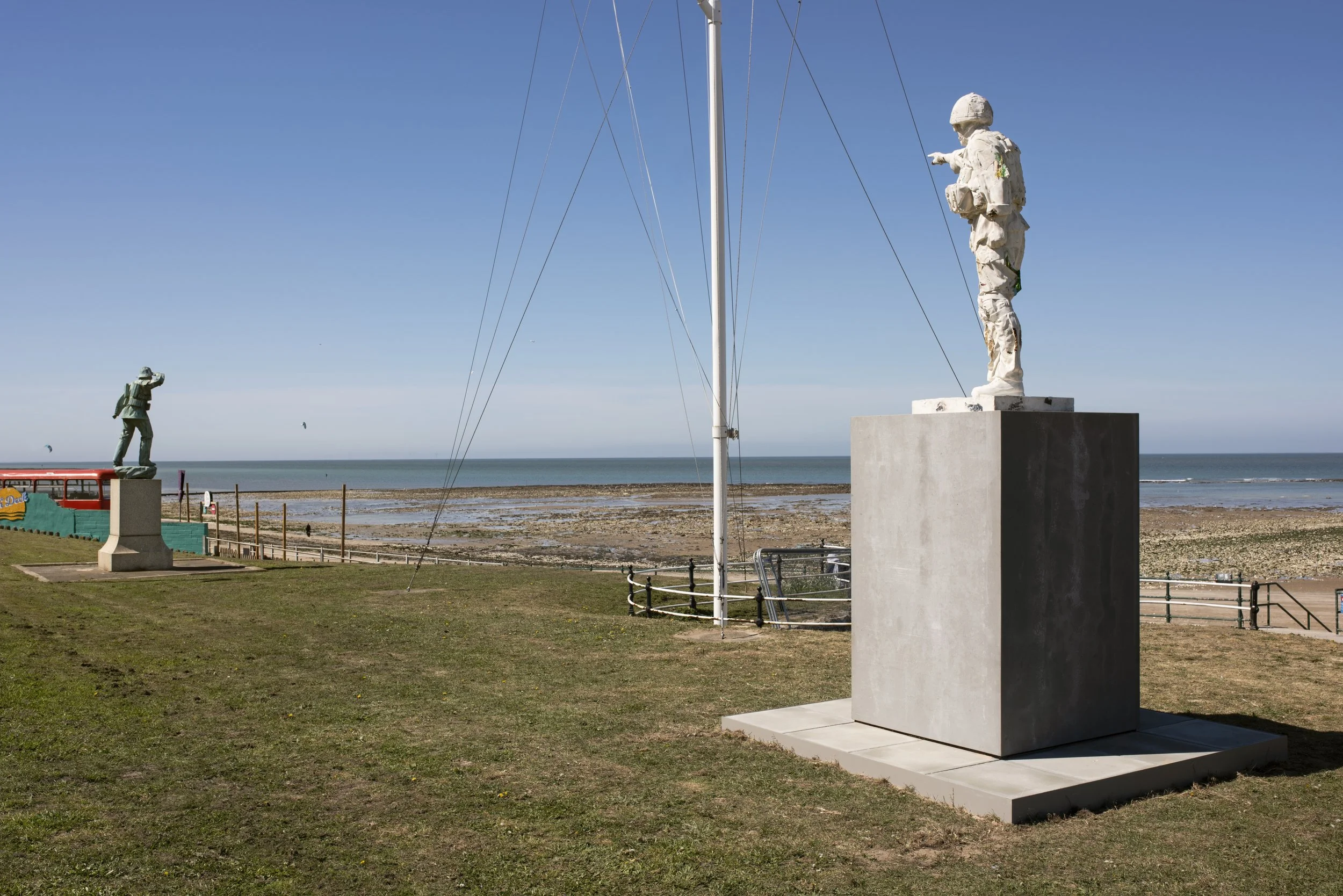
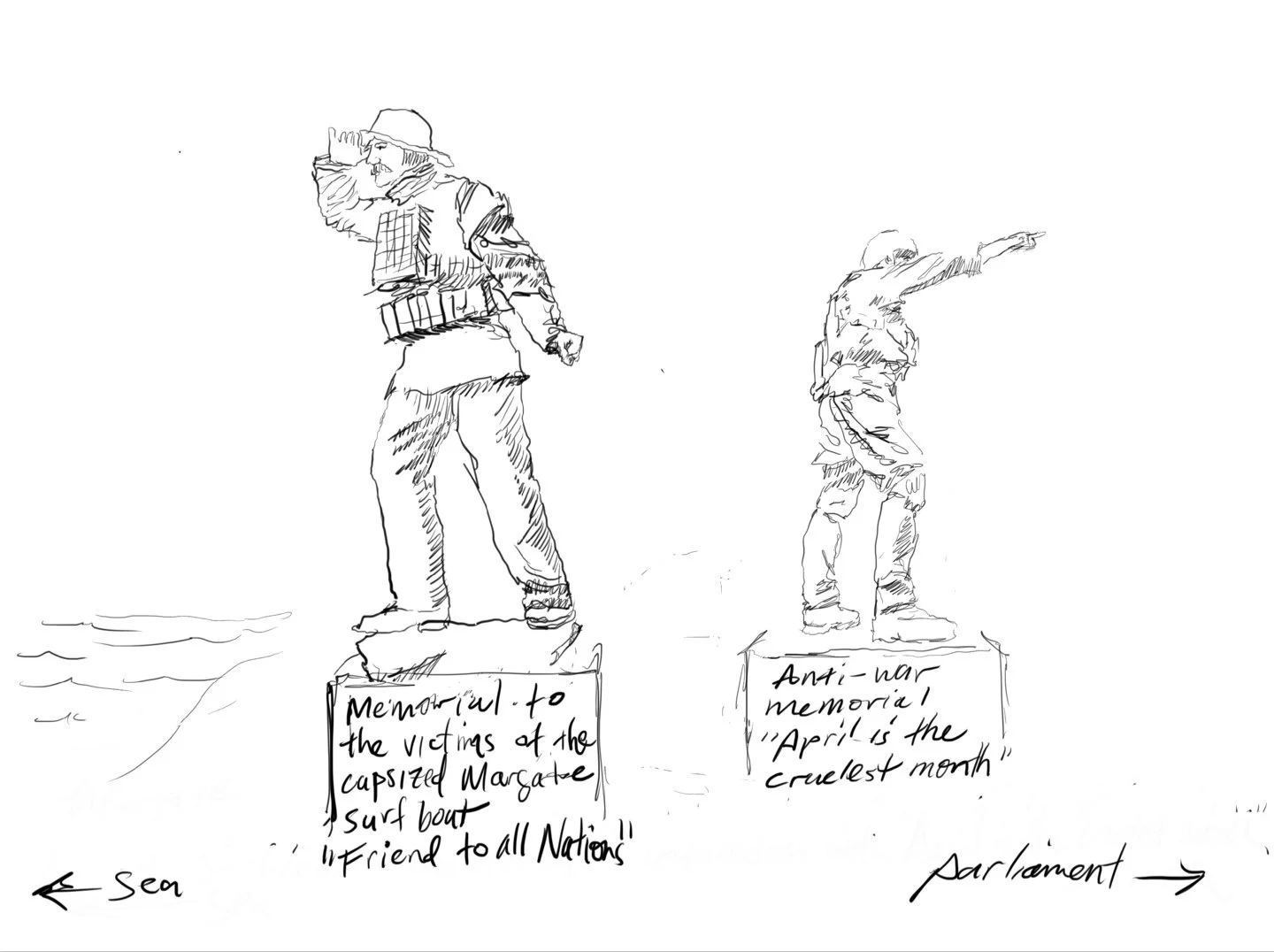
I imagined the statue appearing on land not as an Iraqi, but as a British soldier, pointing not at some imagined enemy across the sea, but inland, toward Parliament, where the decision to invade Iraq was made. Turning his back on the sea, he would be in dialogue with the Surfboat Memorial looking out.

Daniel Taylor, a member of Veterans for Peace, pictured with the sculpture for which he acted as both model and collaborator.
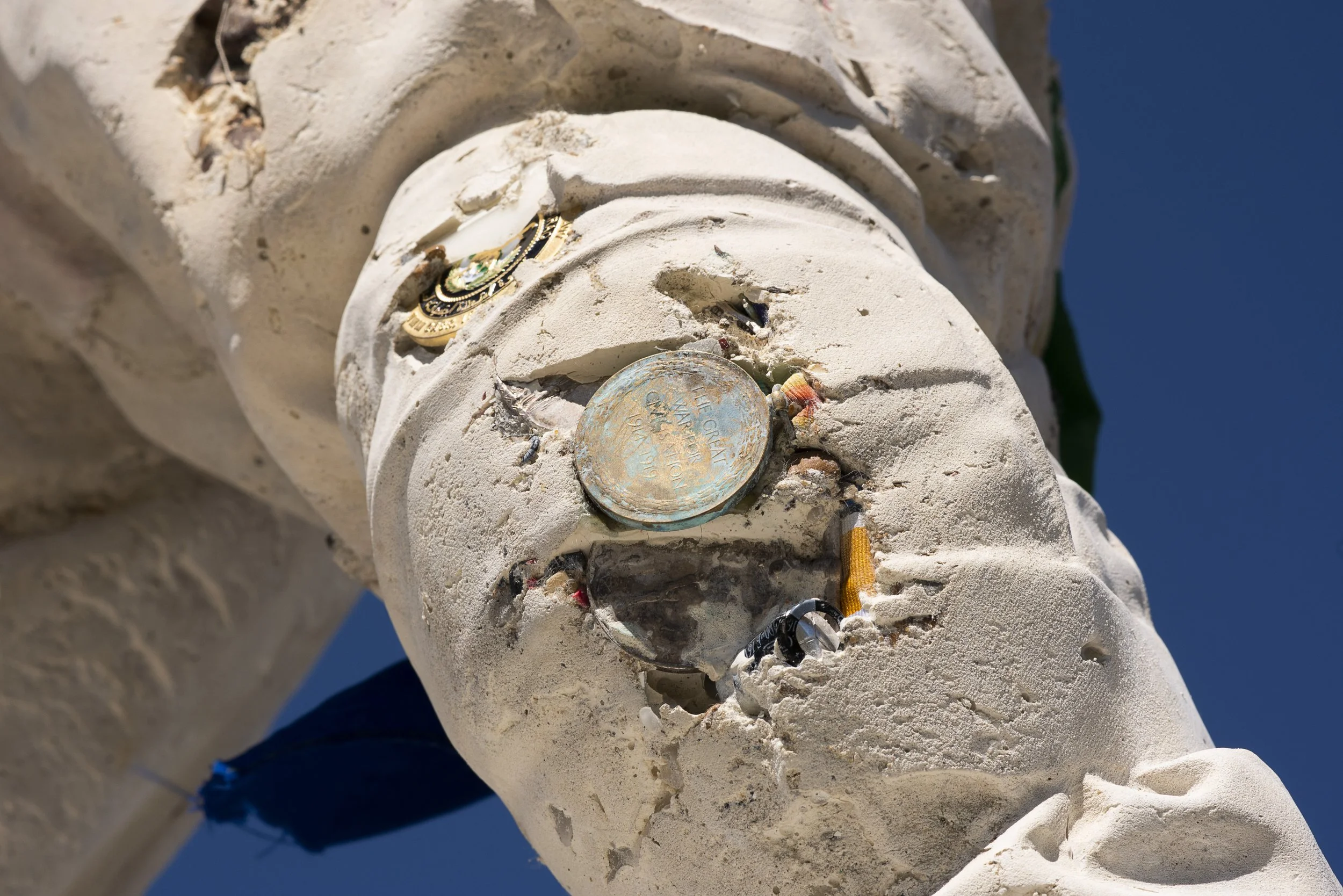
Daniel explained that for contemporary UK veterans, medals are not only proof of service but also a form of currency, often necessary to access medical care for conditions such as PTSD. Months later, when he donated his own medal to the sculpture, I hesitated and reminded him of what he had said. He replied, “I want to spend it now.”

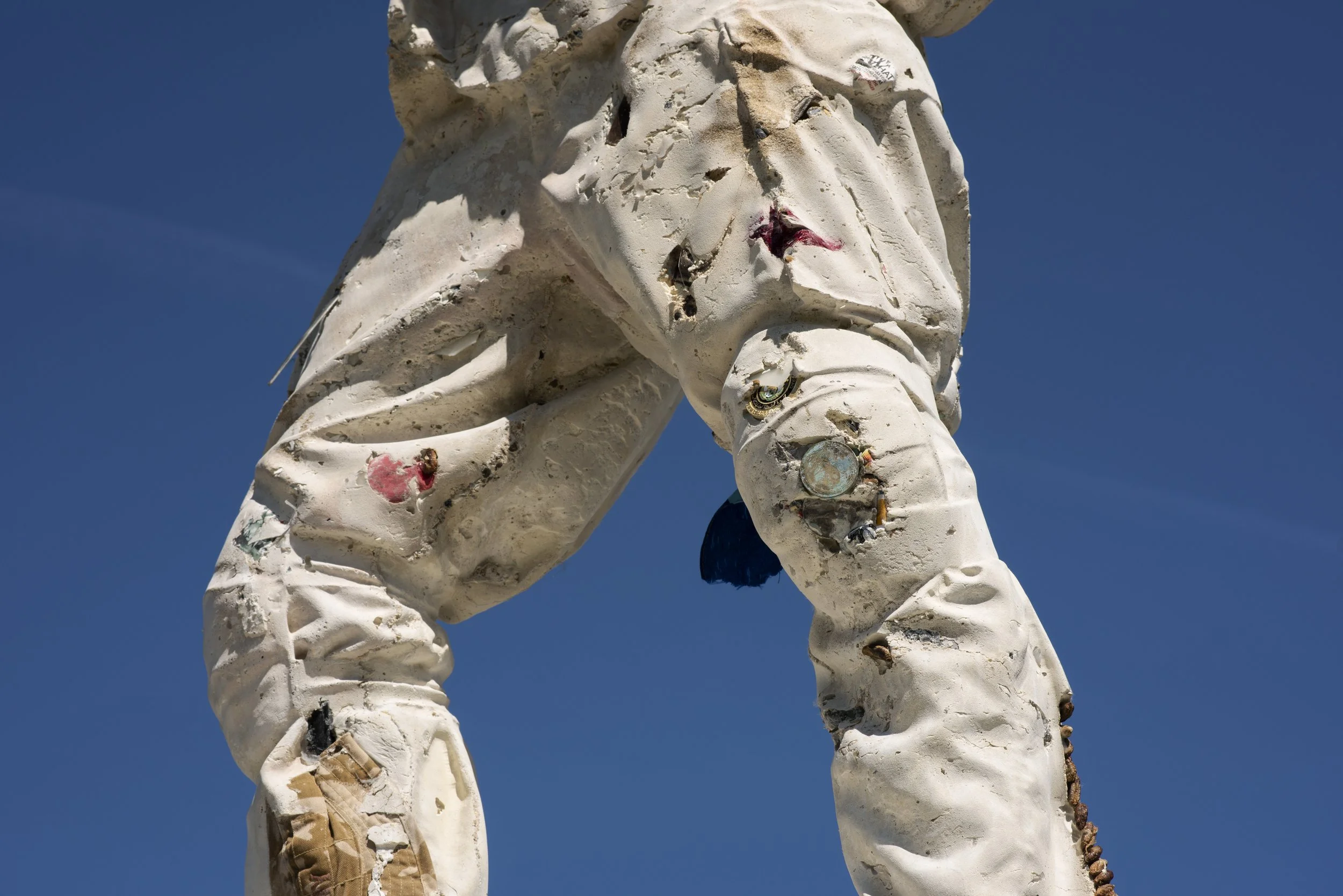
Just as a sharp vein in stone is the document of geological cataclysms and traumas, the sculpture’s aggregate acts as a new type of sedimentary stone, forming around the objects, revealing them here and there, peeking out like fossils.

At its base, I placed a plaque inscribed with a statement by the First World War British soldier and poet Siegfried Sassoon, who, like me, had Iraqi Jewish ancestry—and whom I later discovered to be a direct ancestor: “I am a soldier, convinced that I am acting on behalf of soldiers. I believe that this war, on which I entered as a war of defence and liberation, has now become a war of aggression and conquest.”


I wish to dedicate this sculpture to my Baghdadi ancestor, Siegfried Sassoon, to Veterans for Peace, and especially to Daniel Taylor, whose courage and love are impossible to put into words. Only through him and his fellow peace activists could an authoritarian war memorial become an anti-war memorial. Let this be a sculpture that changes its position for a soldier who changed his.