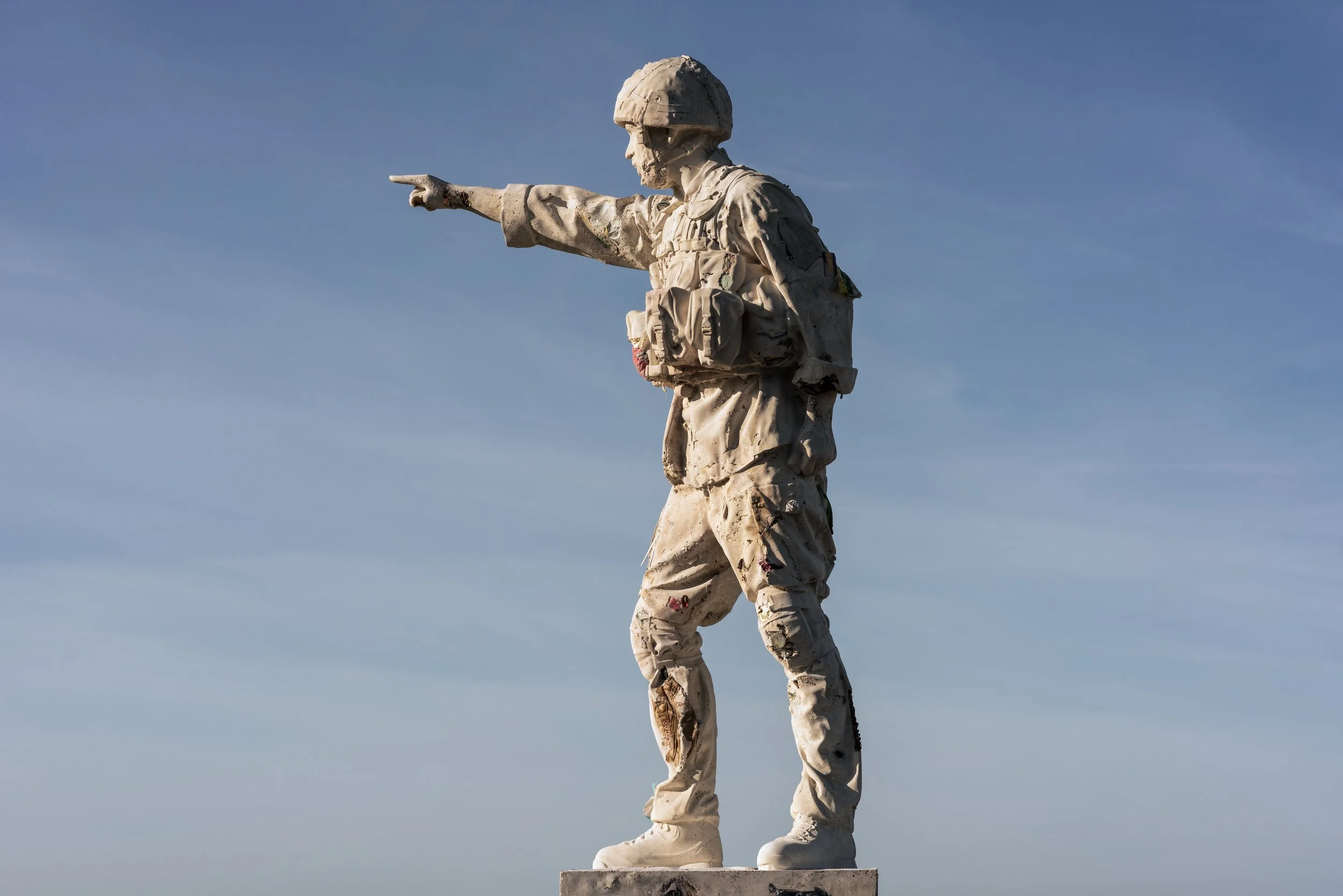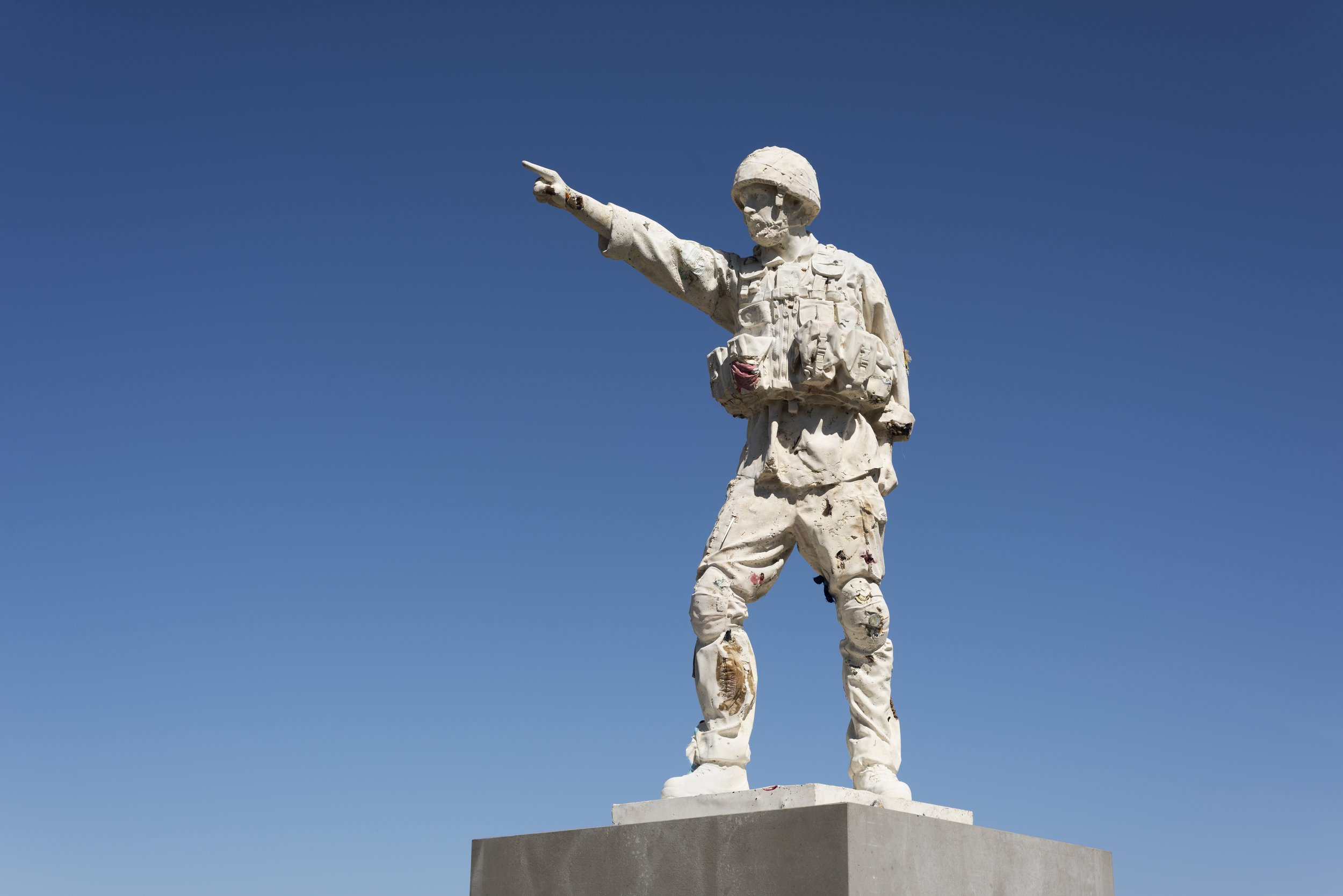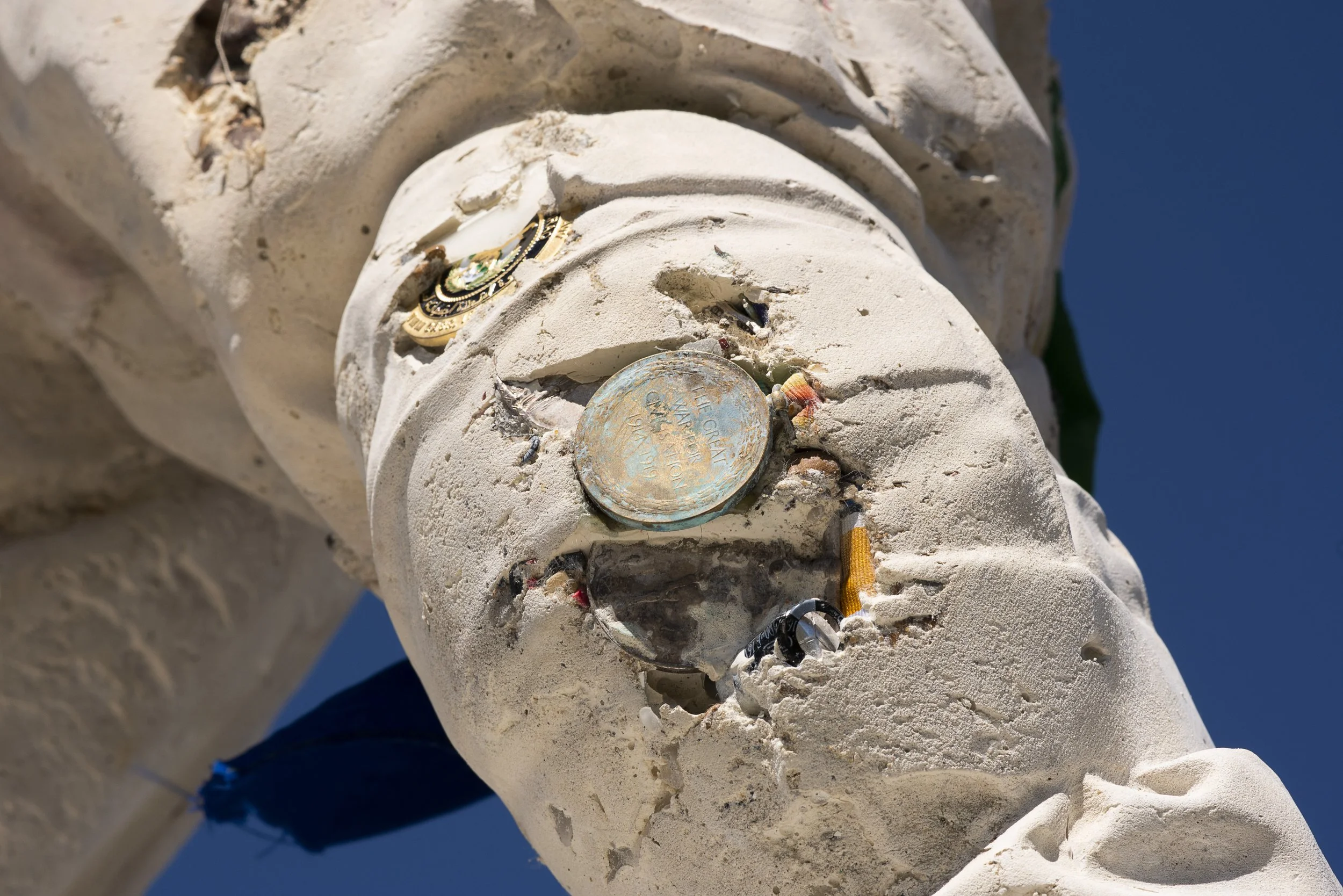
The material used to cast the sculpture is made from a combination of concrete, calcite from Margate, and soil from Basra. Contained in it are objects and artworks associated with war and trauma, donated by Veterans for Peace and residents of Kent. Just as a sharp vein in stone is the document of geological cataclysms and traumas, the sculpture’s aggregate acts as a new type of sedimentary stone, forming around the objects, revealing them here and there, peeking out like fossils.

The title of the work refers to the opening line of TS Eliot’s The Wasteland, part of which was written in the shelter on the coast of Margate whilst he was convalescing from a nervous breakdown. Just as the poem makes reference to collapse, so too does the title, invoking the month of April 2003, when the destruction of Iraq was characterized not only by human casualties, but also by the destruction and disappearance of its cultural heritage. On 9 April, Saddam’s statue in Baghdad’s Firdos Square was toppled. The next day, the National Museum of Iraq was looted; more than 7,000 of its artefacts remain lost. The following week, the Basra corniche soldiers were gone.